Take a situation that comes up often in expansion projects. A plant builds hall one now and hall two two years later. The first hall needs around 1,600 kVA today; the final load, once the second hall is running, is closer to 3,150 kVA. The usual choice is framed as two options. Buy the full substation now and carry a half-loaded transformer for two years, paying the no-load loss every hour of that period. Or buy a compact substation now, a second one later, and inherit two transformers, two low-voltage boards and a paralleling question that was not in the original scope.
There is a third framing: stop treating the substation as one box. An MV power module is a factory-built, functionally complete section of a substation — incoming, metering, transformer, outgoing — delivered with its own enclosure, its own busbar section and defined coupling points. You install the sections that hall one needs and couple the rest onto the same busbar run when hall two arrives.
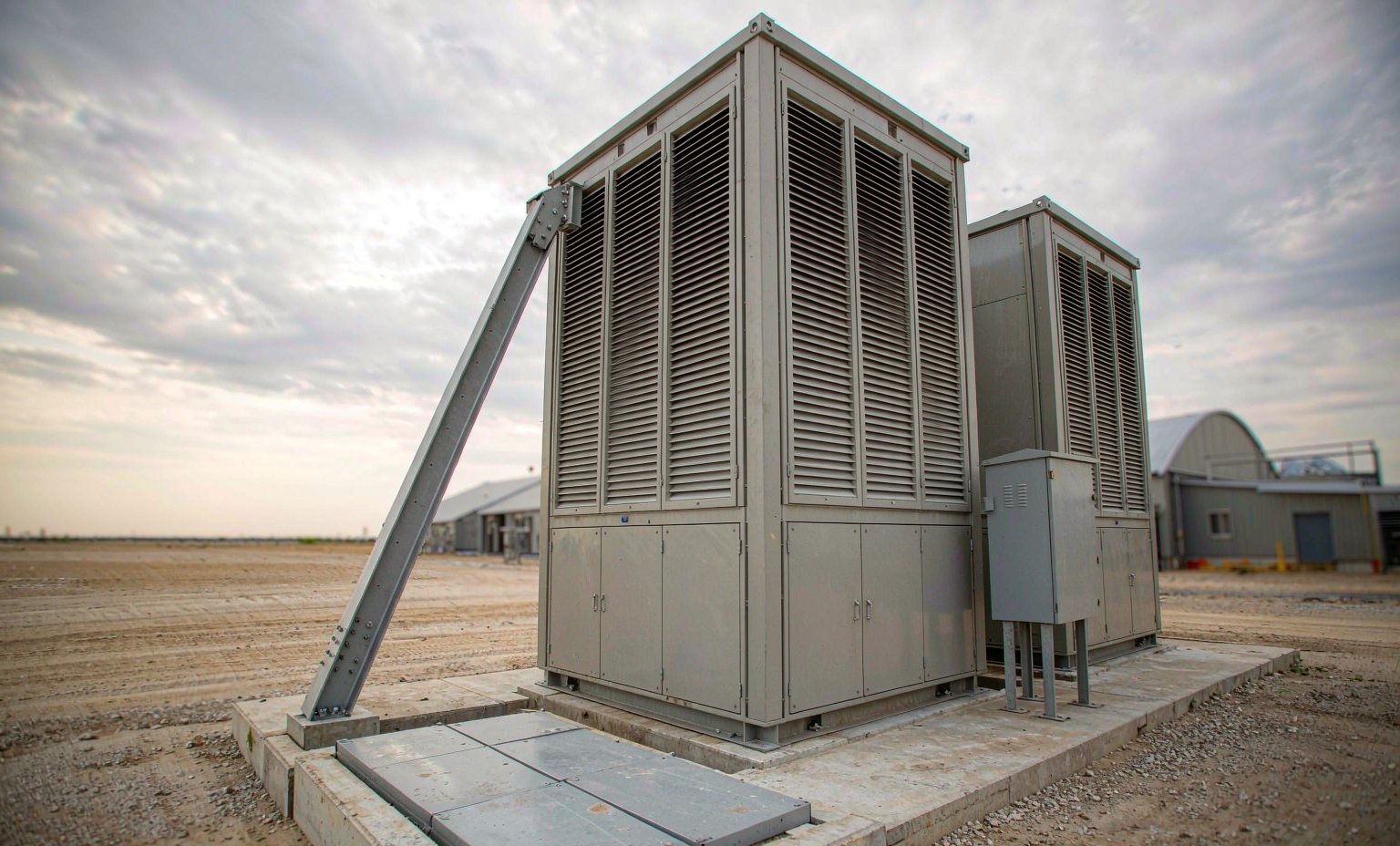
What Actually Counts as a Module
The word gets used loosely, so it is worth being precise. A module is not simply a smaller box. Three things have to be true: it performs one complete function on its own (it is not half a switchboard waiting for the other half), it arrives from the factory with that function already tested, and it has a defined interface at every boundary where the next section will meet it.
This is where a module differs from a prefabricated substation. A prefabricated substation is normally one enclosure that already contains the medium voltage section, the transformer and the low voltage board — it is optimised to arrive complete and be energised quickly. A module is optimised to be joined to the next one. If your capacity is known and stable, the single enclosure is usually cheaper and simpler. If your capacity arrives in stages, the module arrangement is usually the one that costs less over the life of the project.
Three Signals That Splitting Is the Right Call
- The load arrives in stages. Staged production, phased building handover, or a plant whose final process equipment has not been ordered yet.
- The site restricts a single lift. A narrow access road, a low bridge on the route, or a plinth that cannot take the point load of one large unit — several smaller modules spread the lifting problem out.
- You want the transformer section separate from the switchgear section. Splitting them lets you specify the MV switchgear to the final rating from day one while the transformer capacity follows the load, which is often the cheapest way to avoid replacing equipment later.
If none of the three applies — one hall, known load, easy access — buy the complete unit. Splitting adds interfaces, and every interface is something that has to be specified, tested and maintained.
The Interfaces Decide Whether It Works
Almost every problem with modular substations is an interface problem, not an equipment problem. Six of them deserve a line each in the specification:
- Busbar coupling. The rating, the short-time withstand current and the mechanical arrangement of the coupling between sections. This has to match on both sides, including the extension direction — left or right is not a detail you want to discover on site.
- Cable entry and sealing. Bottom entry into a shared trench, or side entry between sections. The sealing method and the gland plate layout should be drawn before the plinth is poured, not after.
- Protection grading. Adding a section changes fault levels and may change the settings on the incoming device. The grading study should be done for the final arrangement, with the interim settings written down as well.
- Earthing. A continuous earth path across sections, with a defined point where the earth grid connects. Two sections earthed independently is a fault waiting for a current.
- Enclosure consistency. The degree of protection and the corrosion protection should be the same across all sections. A module with a lower IP rating than its neighbour becomes the weak point of the whole run.
- Ventilation. Each section needs its own air path. When sections are joined, check that the louvres of one are not discharging into the intake of the next.
What to Put in the Enquiry
A modular enquiry that gets quoted accurately states the section list and the function of each one, the busbar rating and short-time withstand current for the final arrangement, the extension direction, the degree of protection, the internal arc classification where it applies, and the site conditions — ambient temperature range, altitude, humidity and whether the plinth is at risk of standing water. It also states which sections are in the first shipment and which are held for later.
The last point matters commercially. If you order a module arrangement in two shipments, the second shipment has to be built to the same drawings. Naming the reserved sections in the first order is cheaper than re-opening the design two years later, when the drawings have moved on and the components may not be identical.
Where One Compact Unit Still Wins
For a single building with a known load, a compact substation arrives as one unit, needs one foundation, one set of cable entries and one commissioning visit. It is simpler to own and easier to hand over to a maintenance team that will not grow. Modular arrangements earn their keep when the project changes shape — and only then.
Frequently Asked Questions
Is an MV power module the same as a compact substation?
No. A compact substation is a complete unit: medium voltage section, transformer and low voltage board in one enclosure, energised as a whole. An MV power module is one functional section designed to be coupled to others, so capacity and function can be added later without replacing what is already installed.
Can sections be added years after the first installation?
Yes, provided the first order reserved the coupling interface. The busbar rating, extension direction, enclosure rating and protection grading should all be set for the final arrangement from the start. Adding a section to a substation that was designed as a closed unit is usually a rebuild, not an extension.
Does splitting into modules cost more?
The first shipment is usually more expensive than one equivalent compact unit, because interfaces, couplings and separate enclosures add cost. The total cost of a staged project is usually lower, because you are not paying for idle capacity and you are not replacing equipment when the load grows.
Talk to Our Engineering Team
Send the single-line diagram, the load list and the site conditions. We will come back with a proposed arrangement, the applicable standard set and a quotation on FOB, CFR or CIF terms. Email info@xsdfftransformer.com, call +8615867897761, or message WhatsApp +852 5416 2620.